Asparagus Salad
A simple and unique way to enjoy fresh asparagus with a light dressing. This one calls for Parmesan cheese. There is also an accompanying recipe for beef and potato salad in this post if that floats your CSA boat!


Asparagus-
Asparagus is a perennial, spring vegetable. It grows in spears.
The stems of the asparagus will naturally snap to remove the woody bottoms. Asparagus can be grilled, roasted, steamed, blanched etc. Some people like to peel the outer layers of their asparagus, but it is not necessary. Be careful not to overcook, they will become stringy and/or mushy.
Green- the most common variety
White- a field blanched version on the green variety
Purple- very tender and sweet, but loses its purple color when cooked
When you get your asparagus home, cut the bottoms just a tiny bit (1/4 to 1/2 inch) before placing upright in a glass of water, just covering the base of the stalks with about 1/2 inch or so. Treat them like a flower, keeping them on the countertop for up to a few days.
Vitamin C, A, K, thiamin, folate, iron, fiber
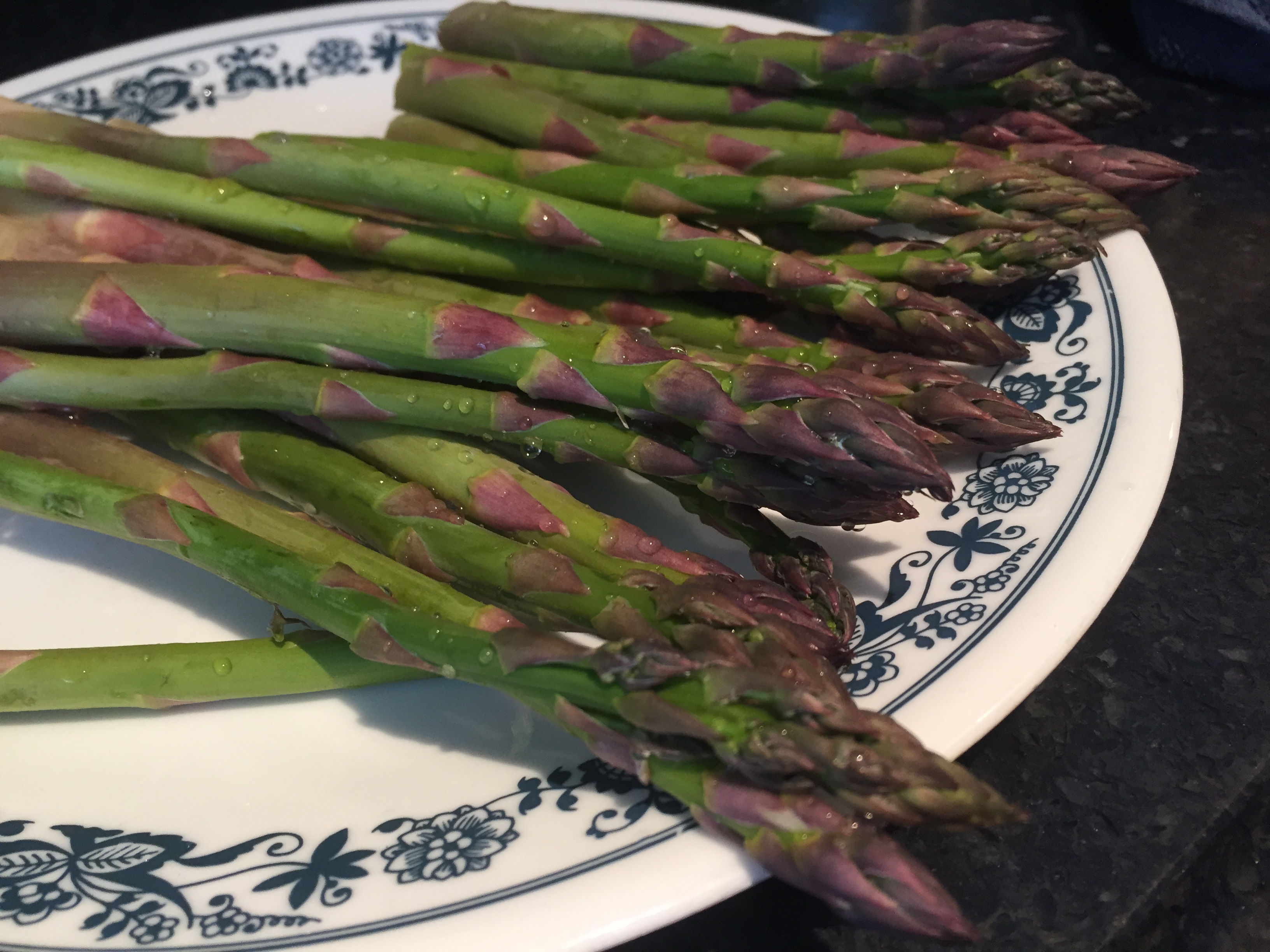
There’s nothing quite like fresh asparagus in the springtime. Aside from some tunnel spinach, it’s essentially the first crop that wakes up from the winter doldrums and makes you realize that the Summer CSA is just around the corner. The crunch, the taste, the fact that it’s packed with vitamins and nutrients, what’s there not to like?
Fresh asparagus from the farm is a real treat, as you can just munch on and enjoy it raw as it’s so tender and sweet.
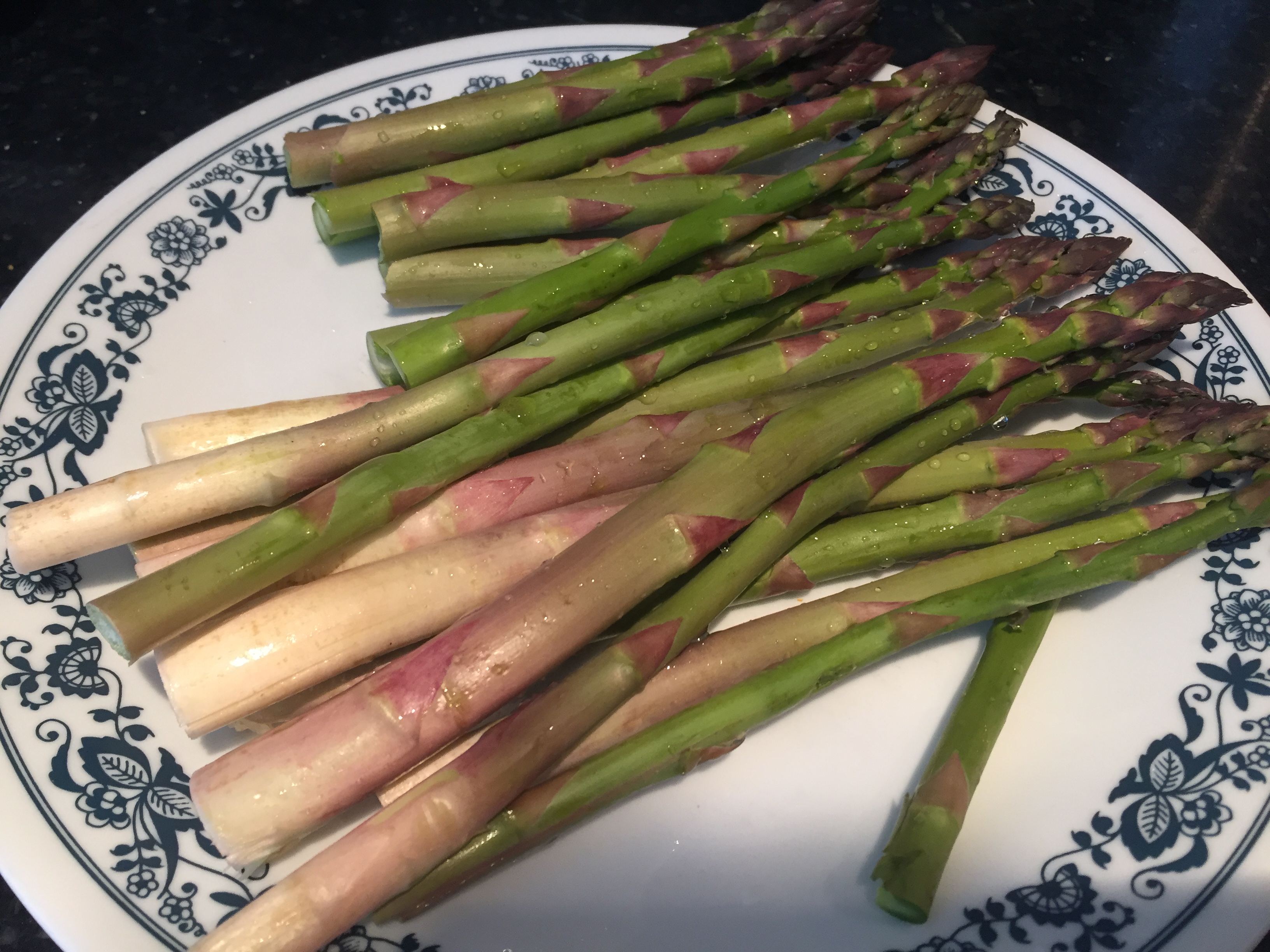 When prepping your stalks for consumption you’ll want to “trim” the ends. I find the best way to do this is just to bend the bottom part of the stalk until it snaps.
 Wherever the snap of the natural breaking point occurs, is where the tough fibrous end begins.
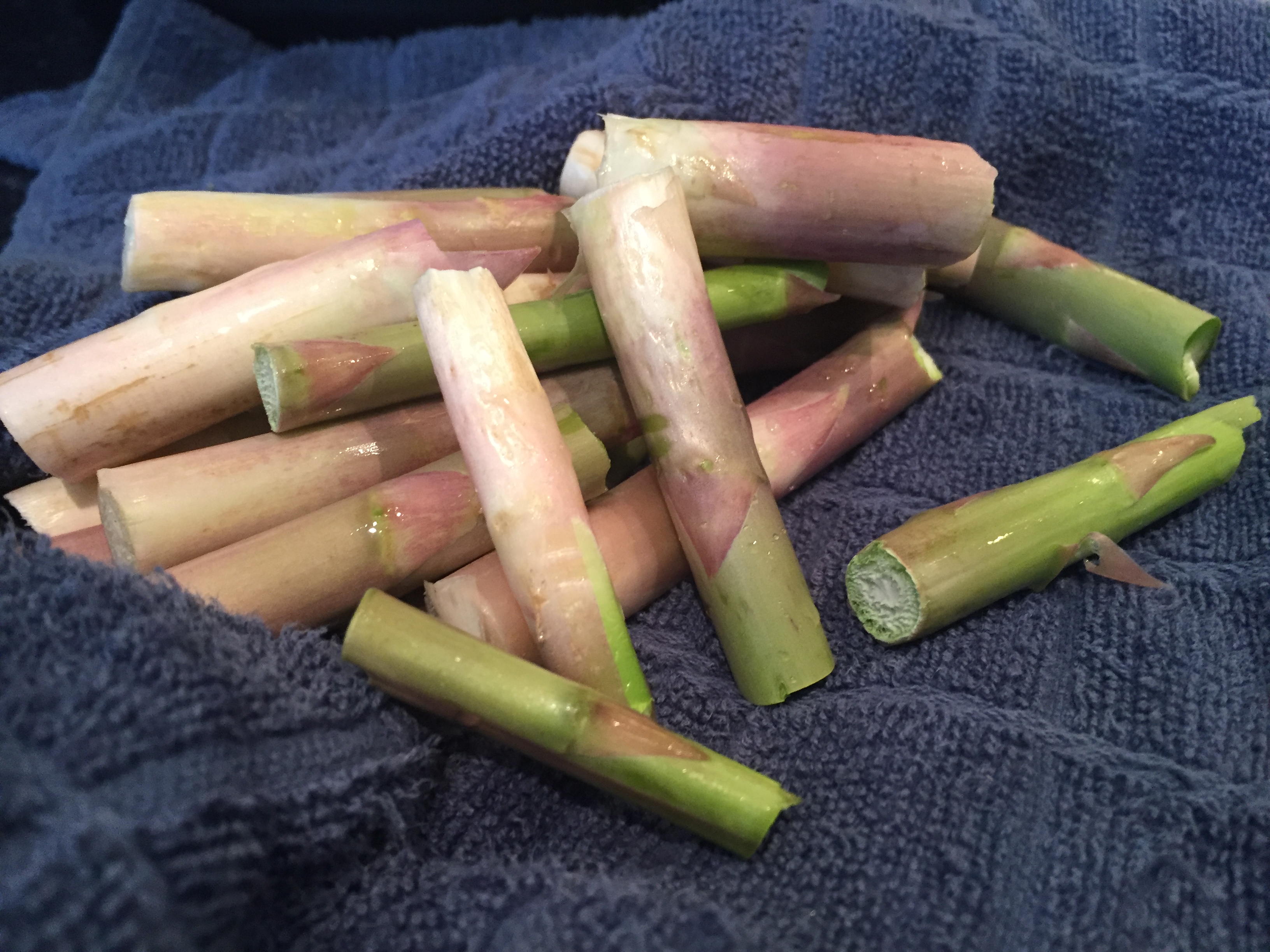
Save the snapped off woody stems for an amazing stock.

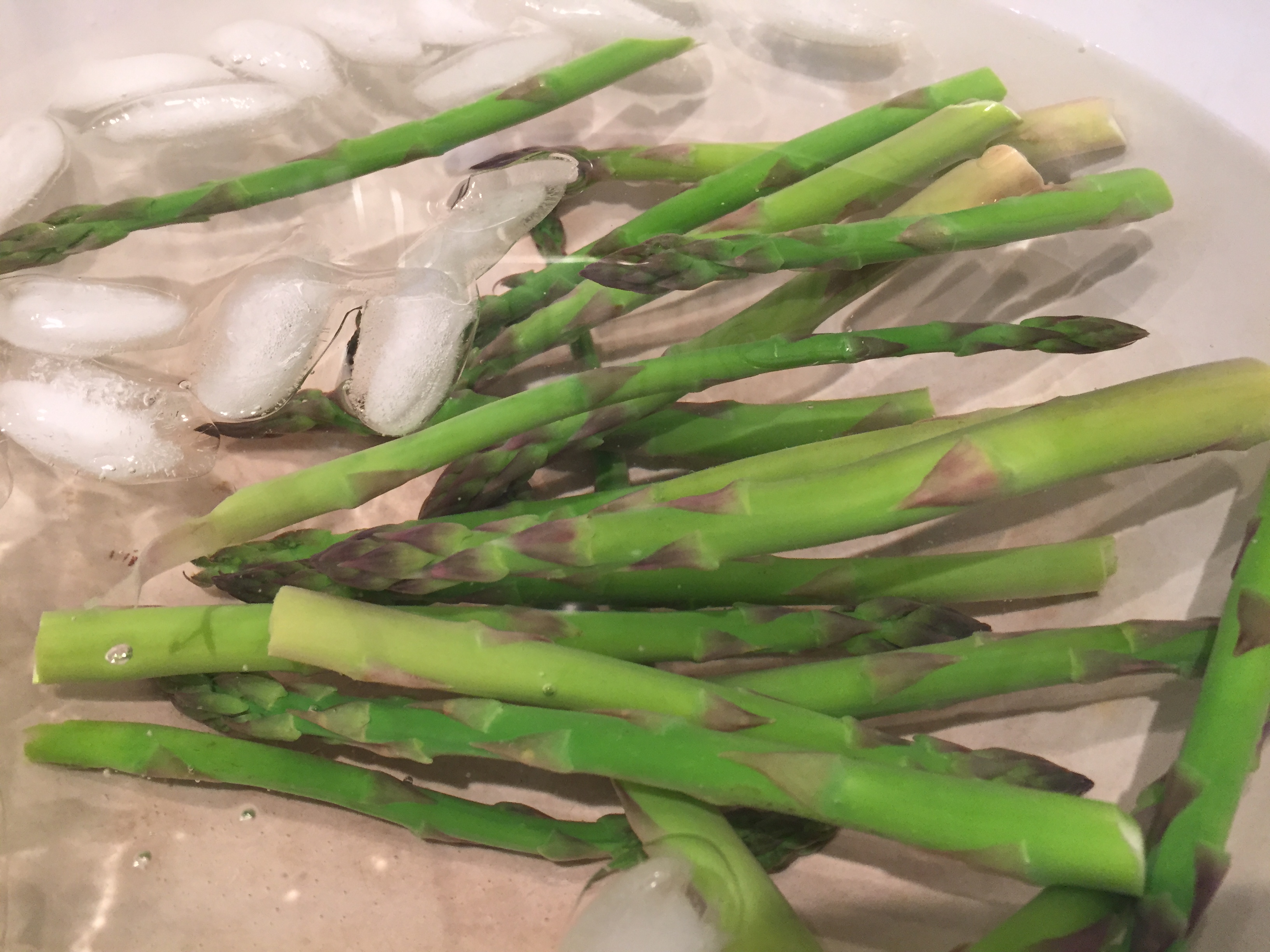
When I have asparagus around, I usually can’t help but drape a runny-yolked egg on top. Roasting them at 400 with a little drizzle of olive oil, a favorite method of consumption. Another classic preparation is blanching your asparagus. Take a few spears of the fresh asparagus and put them into already boiling water, just for a short period of time (1 minute or so) and then quickly transferring them into a bowl with ice and cold water.  This process, called blanching, both locks in the flavor and crispness as well as preserves the vibrant green color.
A simple and unique way to enjoy fresh asparagus with a light dressing. This one calls for Parmesan cheese. There is also an accompanying recipe for beef and potato salad in this post if that floats your CSA boat!
Fresh fiddleheads, asparagus, potatoes, garlic… what could be better? Using the asparagus stems to make the stock base for this soup adds a complexity of flavor that makes this one of my favorite recipes of the year. The addition of marscapone cheese, cream and butter helps too! Serve this with a crusty bread and you have a great main course.
Simple grilled burgers accompanied by grilled fennel, and a salad of local spring veggies. Sarah had artichoke hearts on-hand and those are an optional not-so-local ingredient. This is a salad you too can make your own way depending on what you have on-hand! Post includes the process of blanching explained.


